
From Mechanical Design to Production – The Development of Delfin Technologies’ VapoMeter
Delfin Technologies Oy, founded in 1999 and based in Kuopio, Finland, develops devices for measuring skin hydration, elasticity, color characteristics, and lymphedema for medical, cosmetic, and research applications.
The company recently expanded its product portfolio with the new VapoMeter measurement device. Optotec contributed to the project by providing mechanical design, design-for-manufacturing expertise, and support for production ramp-up. Optotec was selected as Delfin’s partner based on the strength of its proposal:
“We compared several companies, but after reviewing the proposals, Optotec’s stood out as the most convincing both in terms of expertise and budgeting,” says Heikki Meriranta, Chief Technology Officer at Delfin Technologies Oy.
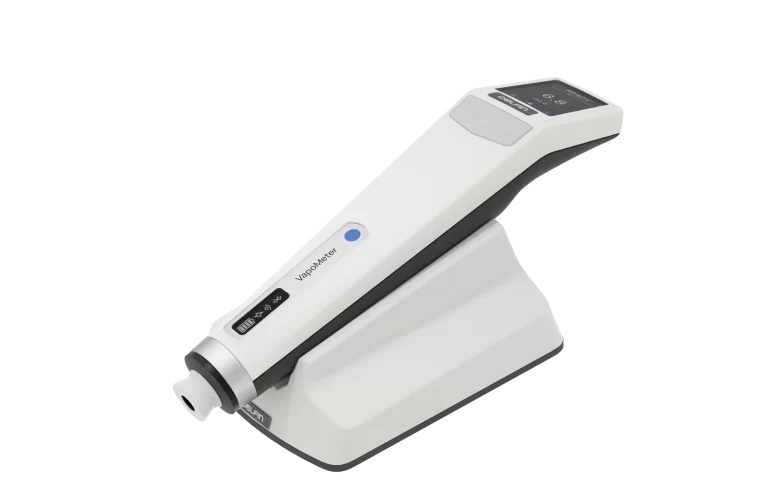
Smooth Collaboration Across the Development Team
The project began with an industrial designer who created the initial design concept for the device. Optotec joined once the preliminary design concept was complete. As development progressed, the design was further refined, including improvements aimed at enhancing manufacturability.
Optotec was responsible for the mechanical design of both the device and its charging dock, including enclosure structures and electronics integration. Material selection and the manufacturability of enclosure components using injection molding were key design considerations. This required extensive expertise in both materials and manufacturing processes.
One particular challenge in the VapoMeter project was the soft-touch surface on the back side of the device. This feature improves grip and provides a more comfortable user experience. The soft-touch finish was achieved using two-component injection molding technology.
In addition to our expertise in injection-molded part design and manufacturing, Meriranta appreciated the creative and proactive working style of our engineers:
“Throughout the project, we asked a lot of questions—some directly related to the task and some not. Whenever there was something you didn’t immediately know, you found the answer quickly. That made cooperation easy and strengthened our confidence in your expertise.”
3D-Printed Prototypes and Simulations Support Optimization
Product development projects frequently utilize 3D-printed prototypes to evaluate usability, durability, and assembly. They are also an effective way to demonstrate product concepts to investors and other stakeholders.
3D-printed prototypes provide a fast and cost-effective method for testing different ideas, and Meriranta considers them an essential part of this type of development work:
“Absolutely indispensable. We use them continuously ourselves. We rarely create prototypes from machined parts. With 3D printing, we can obtain sufficiently accurate prototypes without having to wait months in a machining queue.”
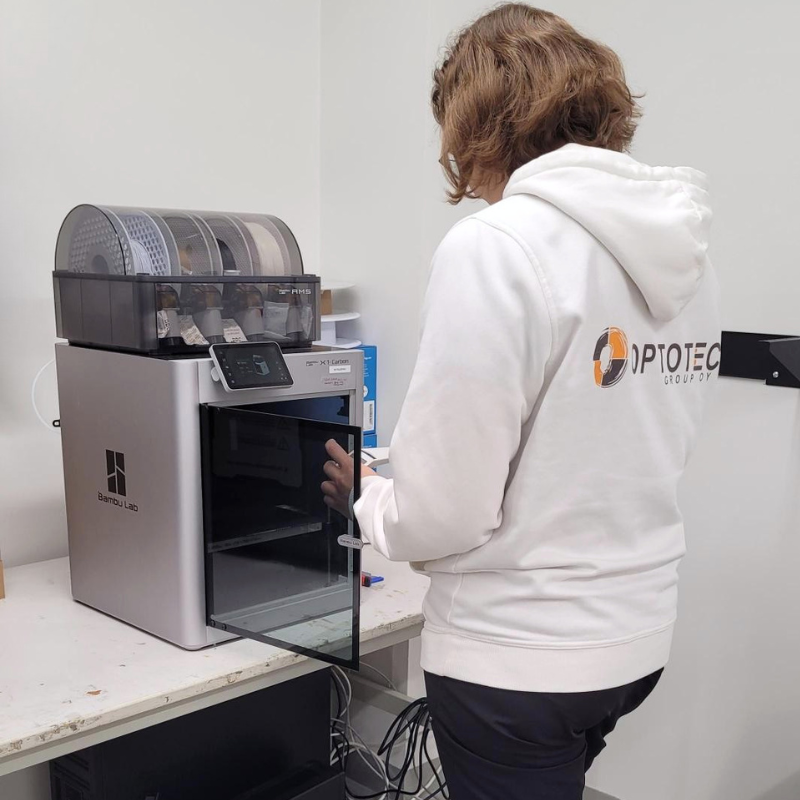
During the VapoMeter design phase, 3D-printed prototypes were used to optimize the device’s button functionality. Tests focused on factors such as button stiffness and whether a tactile click improved the user experience. Based on the results, small design changes were made, including modifications to the button cap above the switch.
Simulation tools were also used during the design phase to verify that solutions working in CAD models would perform effectively in real-world use. Simulations were employed to assess the durability of enclosure fasteners, optimize the strength and stiffness of the sensor housing, and evaluate the durability and usability of the locking tab connecting the sensor to the main unit. Simulations were also used to compare different button cap concepts in terms of geometry, material, and stiffness, allowing unsuitable alternatives to be eliminated early in the development process.
From Design to Successful Serial Production
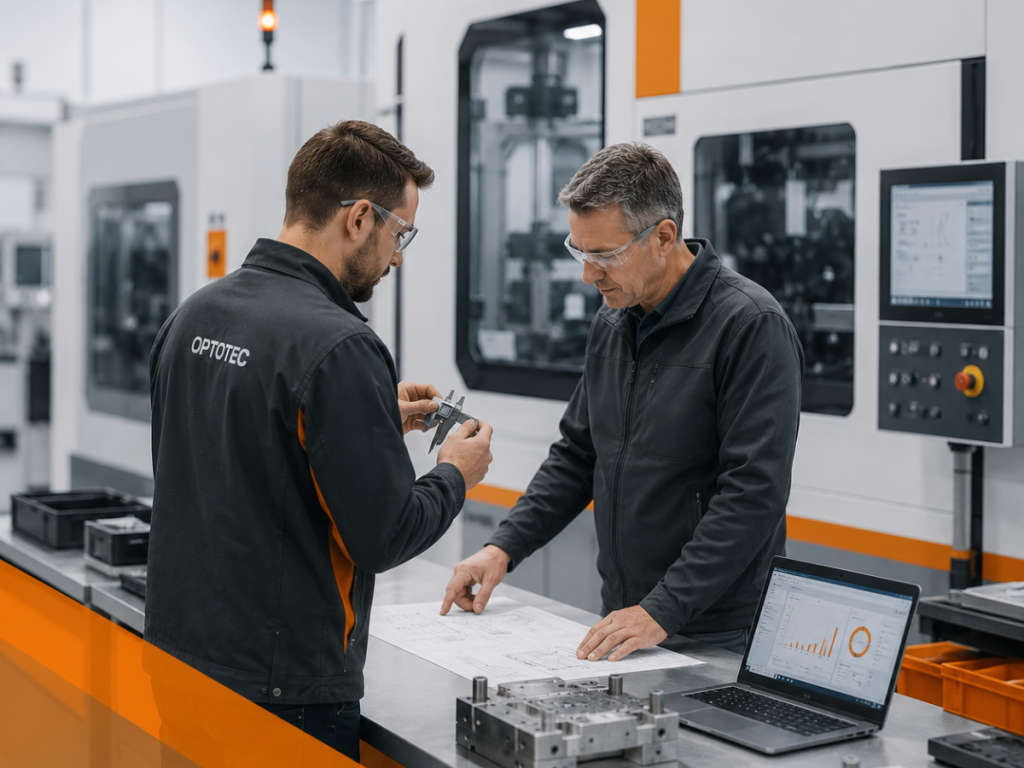
Following the design phase, Optotec also managed key production transfer activities, including mold sourcing, procurement and approval, as well as manufacturer selection. During production ramp-up, our specialist visited the factory to perform measurements and trial assemblies on the pilot production batch, after which full-scale production could begin.
“The molds have performed well, and the parts have transitioned smoothly into production. This would not have been possible without a partner who has a deep understanding of the specific requirements of injection molding,” says Meriranta.
End-Customer Feedback Is the Strongest Indicator of Successful Design
The collaboration resulted in a modern, manufacturable, and user-friendly measurement device that, according to Meriranta, has been well received both internally and by customers.
“The product feels extremely solid and well finished. It is a premium device, and it needs to feel like one,” Meriranta explains. “When we have presented the product at trade fairs, we have received a great deal of praise for its appearance, which is also a credit to the industrial designer. We have also received positive feedback regarding the ease of sensor replacement and serviceability,” he adds.
The VapoMeter development project is an excellent example of product development at its best: seamless collaboration between experts from different disciplines, resulting in a product that all parties involved can be proud of.